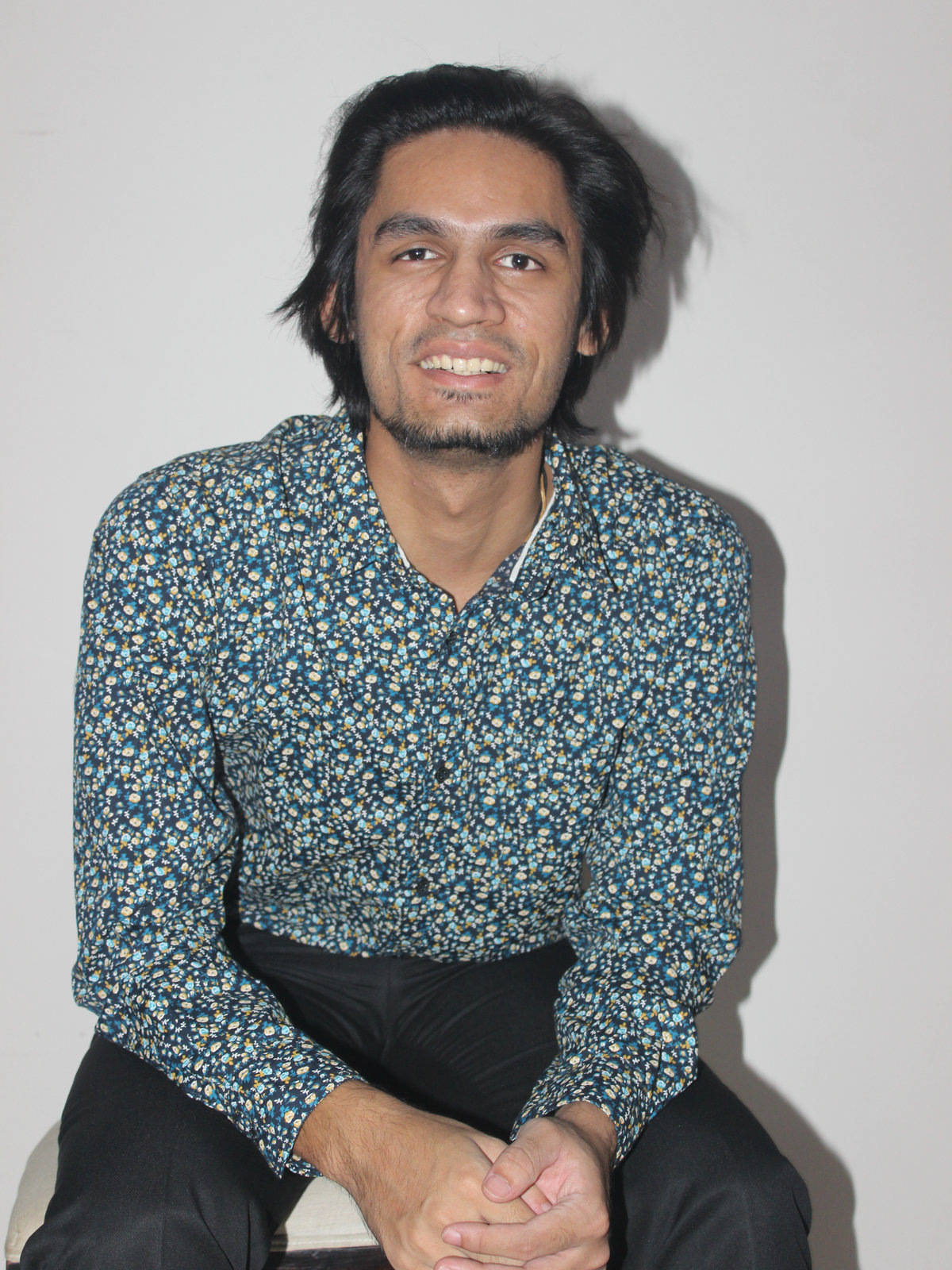
Jai Shekhar. Investment professional. Backing technology founders working on scalable problems across the physical and digital fronts of the global south.
About
I ask why a technology works, who pays for it, and whether it still works at ten times the scale.
The longer story, kept short.
I grew up in a defence family that moved every few years, across four states in India, and I have lived in two countries since. It makes you good at walking into a room where nobody knows you.
Technology is the part of a civilisation you can watch happen. Why some societies take a new tool and others leave it on the shelf is the question I keep reading about, mostly in history and economics, which is a strange thing to admit on a work website.
My training is chemical engineering and it stuck. I still want to know what a process costs in energy, what a material will take before it fails, and what a reaction will refuse to do. Most decks reach the market size before any of that is settled.
Since 2020 I have founded a rural last-mile logistics company, consulted on public health systems in Bihar, modelled hydrogen and emissions in Washington, and finished a degree in energy science, technology and policy at Carnegie Mellon in December 2023. None of it was planned as a route into venture.
Some of it ended up in print. I was the lead author of a CEEW report on how far India can rely on its wind, the youngest in the think tank's fifteen-year history, the lead author of a paper in Renewable and Sustainable Energy Reviews on how COVID-19 shook India's renewable power, and a co-author of a Belfer Center paper on centre-state relations in India's climate and energy policy.
I read a lot of economics for someone trained in chemistry, and that is where the second lens comes from: how a business behaves once it is listed, and what the market has already decided about it. In a diligence call I am usually the one asking what the science actually allows.
Away from work I watch a great deal of football and support Chelsea. I look for good cafes and restaurants wherever I am, and I spend a lot of time with my dog, Oreo. He is unimpressed by all of the above.
Education
Two degrees, six years, and one long move.
01 // 2022 - 2023
Carnegie Mellon University
MS, Energy Science, Technology and Policy // Pittsburgh
I went to Pittsburgh in August 2022 and finished in December 2023. The degree runs across the engineering, policy and business schools, which suits someone who could not decide which of the three they wanted.
The coursework included Energy Transportation and Storage, Energy Finance, Entrepreneurship in Energy, Funding Early-Stage Ventures, Quantitative Methods for Policy, Climate Change Adaptation and R analytics. The one that changed my direction was Jay Whitacre's on energy storage and entrepreneurship. He has built companies out of his own lab, and watching someone run the science and the company in the same week is what made venture capital look like serious work rather than a career to get to later.
Alongside the coursework I worked with US Steel on the quantitative carbon-saving model for moving a steel-making site from blast furnace to electric furnace operation, and I ran the grant portfolio at the Scott Institute, which is on the work page.

02 // 2017 - 2021
Manipal Academy of Higher Education
B.Tech, Chemical Engineering, with a minor in Digital Marketing // Manipal
Four years of chemical engineering, finished in August 2021, with a minor in digital marketing. Most of the last two were process design: mass and energy balances, reactor kinetics, and the economics that decide whether a plant ever gets built, which is closer to what I do now than it sounds.
The final year was spent at home in Delhi, after the campus shut in 2020, which is when I started Candela Energy. Running a company from a bedroom during a lockdown taught me more about customers than any course did.

Reading
What I am readingEssays I keep going back to and passing around, mostly on growth, India, and what AI does to both.
Diligence
Using diligence to read the ecosystemEvery logo here is a company I have spent real time with. Put side by side, they start to read like a map of the market: who is building what, which ideas keep coming back, and where the same pitch has already failed once.




























































































































// hover a mark for its colours, click to visit[129]
Listed alphabetically within each row. Inclusion says I spent time on the company, nothing about whether a fund invested.
Colophon
This website was designed and built by Jai Shekhar.
- Currently //Senior Associate, Investments at ITI Growth
- Based in //Mumbai, India
- Writing at //abruzzispur.substack.com
- Birds //0 birds spotted today
- Fireworks //0 fireworks launched today
// hover a place to find it, click it to open its card
The master's years. Carnegie Mellon in Pittsburgh, the hydrogen fellowship in Washington DC, and San Francisco for a look at Silicon Valley.
Japan from Tokyo to Hiroshima, the islands and capitals of South East Asia, two cities in Azerbaijan, and Indore and Jaipur for work.
England from London to Liverpool by way of Bath, Oxford and Leeds, then across to Bangor in north Wales.
Lived in //(childhood)(hometown)(2017 - 2021)(2022 - 2023)(2024 - now)
1 human is watching the tigers drink water
// the tigers are on film, dithered to the grid. hover for the colour